Last Updated at Jan 7, 2025 by Bloomy Indoor - 13 min read
Growing a Thriving Indoor Monstera Plant: My Tips
Grow a thriving indoor monstera plant with my easy-to-follow tips. Learn how to care for this beautiful large-leaf plant.
Table of Contents
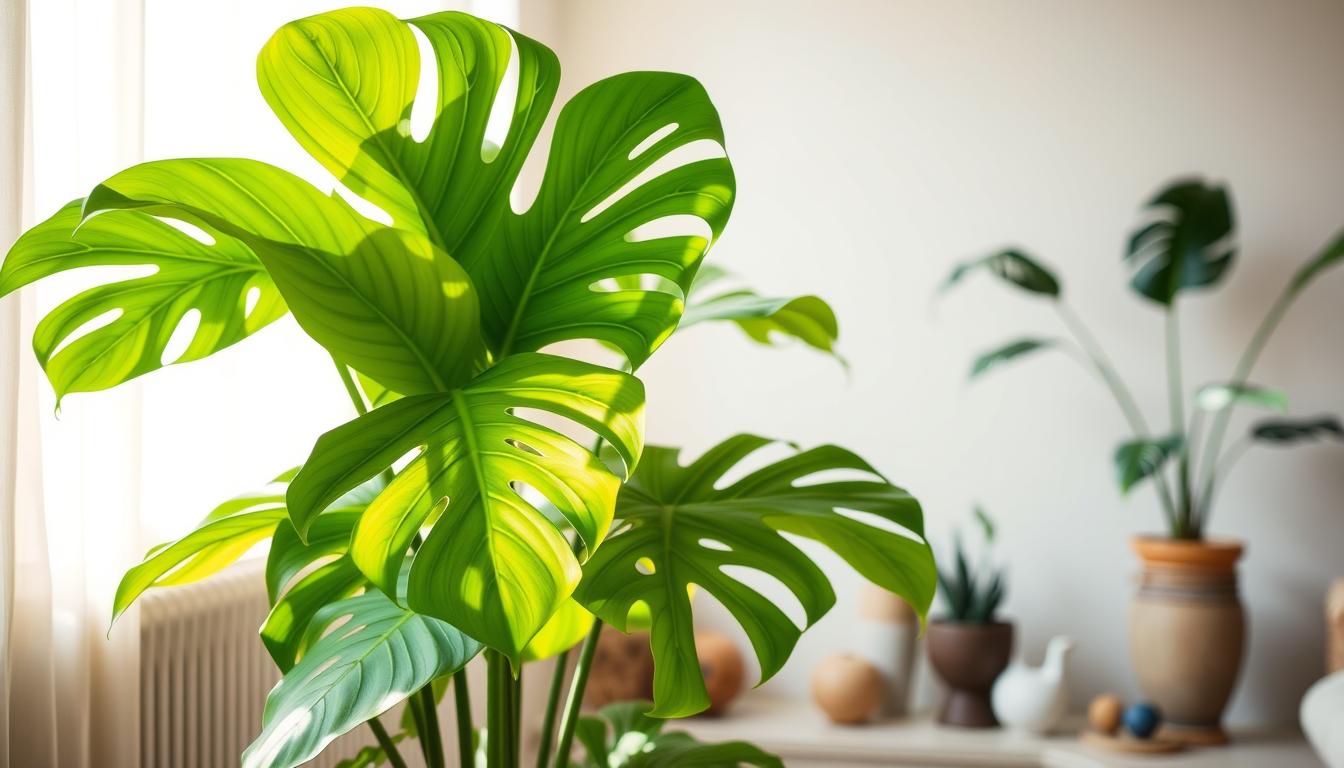
I’ve always been drawn to the Monstera plant’s unique, holey leaves. I’m excited to share my journey growing this stunning indoor large Monstera plant. Native to southern Mexico and Panama, Monsteras can grow up to 66 feet tall in the wild. But indoors, they usually reach about 9 feet, making them perfect for any space.
With the right care, these plants can thrive and even purify the air. They’re a wonderful addition to any home.
Learning about Monstera plant care has been fascinating. I’ve found that the right conditions are crucial for their success. They need slightly moist soil and bright indirect light. Every detail counts when growing a healthy Monstera.
In this article, I’ll share my tips and tricks for growing a stunning indoor Monstera plant. We’ll cover everything from choosing the right variety to fertilizing and pruning.
Key Takeaways
- Monsteras prefer slightly moist soil and bright indirect light
- Watering once a week during the growing season is recommended for indoor Monstera plants
- Monthly fertilization can help promote healthy growth and development
- Providing the right conditions, including temperature and humidity, is crucial for Monstera plant care
- Regular pruning can help maintain the plant’s shape and encourage new growth
- Monsteras can be propagated through stem cuttings or air layering methods
Why I Love Monstera Plants
I find Monstera plants fascinating because of their unique look and leaves. Their big, holey leaves catch everyone’s eye. They also bring a tropical vibe to any room. Learning about monstera deliciosa care shows me how they clean the air and add beauty to indoor plant decor.
Unique Appearance and Foliage
Monstera plants stand out because they grow and change with their surroundings. With the right monstera deliciosa care, they do well in many places. They’re perfect for adding greenery or making a statement in your home.
Healthy Indoor Air Quality
Monstera plants also make the air healthier. They remove toxins, making your home more comfortable. This makes them a great choice for anyone wanting to improve their indoor plant decor and health.
Getting Started with Monstera
Choosing the right Monstera variety can be tough. Each type has its own needs. For instance, Monstera deliciosa likes humid, warm places. It needs dappled light, acidic soil, and stays best between 65°F and 85°F.
Monstera makes a great addition to any room. But, they need the right care to grow well. Start by finding a healthy plant from a good nursery or online. Make sure the leaves are green and the stem is strong. Stay away from plants with yellow or brown leaves, as they might be sick.
Some popular Monstera varieties include:
- Monstera deliciosa
- Monstera adansonii
By following these tips, you can enjoy the benefits of indoor plants. Adding Monstera to your space can bring in some greenery.
| Plant Variety | Light Requirements | Temperature Range |
|---|---|---|
| Monstera deliciosa | Dappled or partial light | 65°F – 85°F |
| Monstera adansonii | Bright, indirect sunlight | 65°F – 85°F |
Ideal Location for Your Monstera
Choosing the right spot for your Monstera plant is key in indoor plant care. These plants love bright, indirect light but can handle medium light too. I’ve found that an east- or west-facing window is perfect for them.
Temperature and humidity are also crucial. Monsteras thrive in temperatures between 65°F and 85°F. They also need a humid environment, with humidity levels between 50-70%. To keep the humidity right, I use a humidifier, especially in dry winter months.

Here are some key considerations for creating an ideal environment for your Monstera:
- Provide bright, indirect light
- Maintain temperatures between 65°F and 85°F
- Keep the humidity level between 50-70%
By following these tips, you’ll create a great space for your Monstera to grow and thrive.
Potting Your Monstera
Choosing the right pot for your Monstera is important. You need a pot that drains well and has lots of holes to avoid waterlogged soil. This keeps your plant healthy and thriving.
A small pot can harm your plant’s roots. Moving to a slightly larger pot, like from 10 to 11 inches, helps. It gives the roots room to grow and prevents waterlogging.
Selecting the Perfect Pot
When picking a pot, think about the material, size, and drainage. A pot with good drainage holes prevents waterlogged soil and root rot. You might also want a pot with a built-in water reservoir for better moisture control.
Choosing the Right Soil
For your Monstera, choose a potting mix that drains well and is rich in organic matter. Don’t use regular potting soil, as it can compact and block drainage. A mix with perlite and bark improves drainage and prevents waterlogging.
By following these tips, your Monstera will thrive. Choose a pot that drains well and use a soil rich in organic matter. This will help your plant grow and flourish.
Watering Your Monstera Plant
Watering my indoor large monstera plant is key. Monstera plants like moderate watering. The soil should dry a bit before watering again.
I check the soil daily. I water when the top inch feels dry. This keeps my plant healthy.
Too much water harms my monstera. It can rot the roots. Too little water makes leaves turn yellow and fall off. I avoid these problems by watering right.
Signs of Underwatering or Overwatering
Underwatering shows in droopy, wrinkled, or yellow leaves. Overwatering causes dark spots, yellow leaves, and mold. Knowing these signs helps me water better.
Establishing a Watering Schedule
I adjust watering based on the season and home humidity. In summer, I water weekly. In winter, it’s every few weeks. Under-watering is safer to prevent root rot.
By following these tips, my monstera thrives. With the right water balance, monstera plants are great for homes.
| Season | Watering Frequency |
|---|---|
| Summer | Weekly or every other week |
| Winter | Every few weeks |
Fertilizing for Optimal Growth
Fertilizing is key for monstera deliciosa care. I use a balanced liquid fertilizer during the growing season, which is spring to fall. It’s important to dilute it to half the recommended strength to prevent root burn.
For indoor plant care, fertilize every two to four weeks in the active growth season. The best NPK ratio for monstera fertilizer is 3:1:2 or 2:1:1. This means more nitrogen than phosphorus and potassium. Balanced fertilizers like 3-1-2, 6-2-3, and 9-3-6 are good choices.

Here are some tips for fertilizing your monstera plant:
* Use a slow-release fertilizer sometimes with liquid types to boost growth.
* Fertilize during the growing season, from mid-spring to mid-fall, every two to four weeks.
* Don’t over-fertilize, as it can cause yellow leaves, root burn, and unhealthy foliage.
| Fertilizer Type | NPK Ratio | Application Frequency |
|---|---|---|
| Slow-release | 3-1-2 | Every 8 months |
| Liquid | 6-2-4 | Every 2-4 weeks |
By following these tips and using the right fertilizer, you can help your monstera plant grow well. Enjoy the benefits of indoor plant care and monstera deliciosa care.
Pruning and Maintenance
Pruning and maintenance are key to keeping your Monstera plant healthy. I’ve learned that regular care is crucial. Large houseplants, like Monsteras, need pruning to stay in shape and grow well.
Pruning in late winter or early spring is best for Monstera Deliciosa plants. It helps them heal and grow new leaves. Prune during the growing seasons (spring and summer) for light touch-ups.
Here are some tips for pruning your Monstera plant:
- Remove dead or damaged leaves or stems
- Cut back long vines to encourage branching
- Use clean, sharp tools to avoid disease
- Prune no more than 25-30% of the plant’s foliage at once
By following these tips and using the right tools, your Monstera plant will thrive. Whether you’re new to indoor plants or experienced, these tips will help keep your plants happy and healthy.
| Pruning Tool | Description |
|---|---|
| Sharp Pruners | Used for cutting thick stems and branches |
| Sharp Scissors | Used for cutting smaller stems and leaves |
| Rubbing Alcohol | Used for cleaning tools to prevent disease spread |
Dealing with Common Pests
As I care for my Monstera plant, I’ve learned that indoor plant care is not just about watering. It also means watching out for pests. Monstera plant care tips often stress the need to check your plant often. This helps catch any pest problems early.
Common pests include mealybugs, spider mites, and scale insects. I look for white powdery patches or sticky honeydew on the leaves. If I find pests, I use natural remedies like neem oil, insecticidal soap, and horticultural oil. These methods help control pests without harming my plant.
Identifying Pest Problems
To spot pest problems, I regularly check my plant. I look at the leaves, stems, and soil for any unusual signs. Catching pest issues early helps prevent them from spreading and harming my plant.
Natural Remedies That Work
Some natural remedies that work well for controlling pests on my Monstera plant include:
- Neem oil: a natural insecticide that can be used to control a wide range of pests
- Insecticidal soap: a mild soap that can be used to control soft-bodied pests like mealybugs and aphids
- Horticultural oil: a refined mineral oil that can be used to control pests like spider mites and scale insects
By using these natural remedies and following good indoor plant care practices, I can keep my Monstera plant healthy and pest-free. Regular checks and quick action are key to preventing pest infestations and ensuring my plant thrives.
Repotting Your Monstera
Repotting is key for my Monstera plant’s growth. Doing it every 2-3 years lets the roots spread and grow. This is vital for the plant’s health and indoor plant benefits. Choose a container that’s only a bit bigger than the old one. This gives the roots room to grow without getting too wet.
A good potting mix for Monsteras has peat or coco coir. It’s like the plant’s natural home. I also use a moss pole for support as the plant gets taller and heavier. For more tips, check out this resource for a detailed guide.
How Often Should I Repot?
How often you repot depends on the plant’s age and growth. Young Monsteras might need a new pot every year. But older plants can go 2-3 years without needing a change. Watch for yellow or brown leaves, which mean the soil needs refreshing.

Steps to Successfully Repot
Start by picking a container that’s just a bit bigger than the old one. Use a mix that drains well and carefully take the plant out of its pot. Be gentle with the roots. With the right care and attention to indoor plant decor, your Monstera will flourish in its new home.
Propagating Monstera
As I care for my indoor large monstera plant, I’ve grown interested in propagation. This way, I can share my plant with loved ones or grow new ones for myself. Propagating Monstera is easy through stem cuttings or air layering.
To begin, I take a cutting from a healthy stem’s tip. I remove lower leaves and trim it to 6-8 inches long. Using perlite or potting soil as a rooting medium helps a lot. Water can also work, but roots in water are weaker.
Applying a rooting hormone can speed up rooting and make roots grow denser. It’s crucial to use a container with good drainage to avoid root rot.
Methods for Successful Propagation
Here are some key methods for successful propagation:
- Stem cuttings: This involves taking a cutting from the tip of a healthy stem and placing it in a rooting medium.
- Air layering: This method involves rooting the plant while it’s still attached to the mother plant.
- Division: This involves dividing the roots of a mature plant to create new plants.
By following these methods and giving the right care, I’ve successfully propagated my Monstera plant. With the right care, these new plants can thrive. They become beautiful additions to any indoor space, making them great for both beginners and experienced gardeners.
Enjoying My Monstera
Now that I’ve grown and cared for my Monstera plant, it’s time to enjoy it. With proper care, my Monstera has become a stunning addition to my home. It adds a touch of tropical flair to any room. Styling my space with Monstera is all about experimenting and having fun with different arrangements.
Monstera plant care tips work for many decorating styles. I like to place my Monstera on a shelf or in a hanging basket. This adds visual interest and purifies the air, improving my space’s ambiance. By following simple care guidelines, I can keep my Monstera thriving and enjoy its beauty for years.
Styling My Space with Monstera
When styling my space with Monstera, I consider its natural climbing habit. I use a moss pole or trellis for support. This helps the plant grow and adds a decorative element to the room. Here are some tips for styling your space with Monstera:
- Choose a pot that complements the plant’s size and style
- Experiment with different arrangements, such as placing the plant on a shelf or in a hanging basket
- Provide support for the plant’s climbing habit using a moss pole or trellis
Sharing My Plant Journey
Sharing my plant journey with friends and family has been rewarding. By following Monstera plant care tips and trying different styling ideas, I’ve created a beautiful space. This space reflects my personality and style.
| Plant Care Tip | Description |
|---|---|
| Watering | Water your Monstera plant once a week, or when the soil feels dry to the touch |
| Fertilization | Fertilize your Monstera plant once a month, using a balanced fertilizer |
| Pruning | Prune your Monstera plant regularly to maintain its shape and promote healthy growth |
Troubleshooting Challenges
As a Monstera fan, I’ve seen these plants face some issues. Yellow leaves, droopy stems, and pests are common. But, most problems can be fixed with a bit of troubleshooting.
Common Issues and Solutions
Rust fungus is a big problem, causing leaves to turn yellow and slow growth. Watch the humidity and treat fungus fast. Mealy bugs are another issue, but a damp cloth or neem oil can solve it.
When to Seek Professional Help
If you’ve tried everything and still have problems, it’s time to get help. A local nursery or plant expert can figure out what’s wrong. They’ll help your large houseplant stay healthy. Their advice will get your indoor plant shopping back on track.
FAQ
What are the benefits of growing a Monstera plant indoors?
Monstera plants have unique, large leaves with holes. They also clean the air by removing toxins. This makes your home healthier.
How do I choose the right variety of Monstera plant?
You can pick from Monstera deliciosa or Monstera adansonii. Look for a plant with bright, healthy leaves and a strong stem.
What are the ideal lighting and environmental conditions for a Monstera plant?
Monstera plants like bright, indirect light. They do best in temperatures between 65°F and 85°F. They also need a humid environment, with 50-70% relative humidity.
How do I properly water and fertilize my Monstera plant?
Water your Monstera plant moderately. Let the soil dry a bit between waterings. Fertilize monthly with a balanced fertilizer, diluted to half strength.
How do I maintain and prune my Monstera plant?
Prune your Monstera regularly to keep it healthy and shaped. Remove dead or damaged parts. Use clean tools to avoid disease.
How do I deal with pests on my Monstera plant?
Monstera plants can get pests like mealybugs and spider mites. Use natural remedies like neem oil to fight pests.
When and how should I repot my Monstera plant?
Repot your Monstera every 2-3 years as it grows. Choose a slightly larger container. Use a potting mix that drains well.
How can I propagate my Monstera plant?
You can propagate Monstera plants through stem cuttings or air layering. Take a cutting, remove lower leaves, and place it in water or a tray to grow roots.
What are some common issues I might encounter with my Monstera plant, and how can I troubleshoot them?
Issues like yellow leaves and pests are common. Check the plant’s environment and adjust care as needed. If problems continue, get help from a nursery or expert.
Related Posts
 Plant Life & Guides
Hoya Pubicalyx Splash – Stunning Variegated Houseplant
Bring the Hoya pubicalyx splash into your home and enjoy its striking variegated foliage. My guide covers everything you need to know about growing and caring for this captivating plant.
Bloomy Indoor
• Jan 11, 2025
• 10 min read
 Plant Life & Guides
Is Hoya Carnosa Tricolor Toxic to Cats? Everything to Know
Discover whether Hoya Carnosa Tricolor is toxic to cats. Learn about its effects, care tips, and alternatives for pet owners.
Bloomy Indoor
• Dec 22, 2024
• 6 min read

