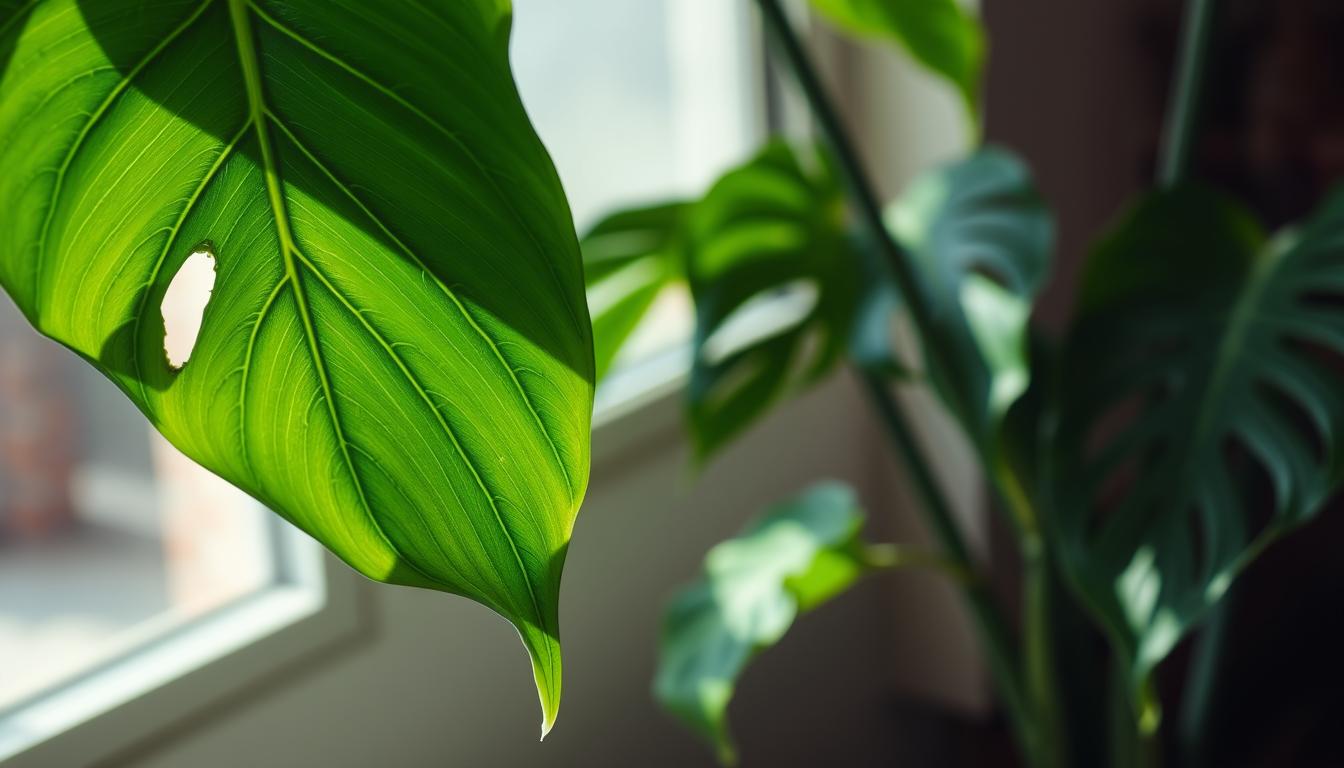
Last Updated at Dec 29, 2024 by Bloomy Indoor - 13 min read
How I Revived My Drooping Monstera Leaves
Struggling with drooping monstera leaves? I'll show you how I revived mine and got my plant thriving again.
Table of Contents
About 75% of Monstera plant owners face the issue of drooping leaves. I was one of them. My Monstera deliciosa, once thriving, began to droop. I was determined to find out why.
After researching and experimenting, I found several reasons for drooping leaves. These include overwatering, underwatering, and poor lighting. I learned that knowing how to fix drooping Monstera leaves is key to saving a struggling plant.
I explored the world of Monstera care. I learned about the importance of proper watering, humidity, and temperature. Fixing drooping Monstera leaves requires a mix of care tips and understanding the plant’s needs.
By identifying the causes of drooping leaves and using the right care tips, I saved my plant. I restored its health and beauty.
Key Takeaways
- Monstera plants need proper care and attention to thrive.
- Drooping leaves can be due to overwatering, underwatering, and bad lighting.
- Knowing how to fix drooping Monstera leaves is crucial for saving a struggling plant.
- Right watering, humidity, and temperature control prevent drooping leaves.
- Understanding the causes and using the right care tips can revive a plant.
- Regular monitoring and adjusting care practices prevent future drooping.
Understanding Monstera Leaves and Their Needs
Exploring monstera plant care, I found it key to know their needs to avoid leaf problems. Monsteras need well-draining soil, moderate water, and bright, indirect light. Meeting these conditions helps your monstera grow well.
The Basics of Monstera Plant Care
Important monstera care tips include using a draining pot, watering right, and keeping it humid. Here’s how to start:
- Water your monstera when the top inch of soil is dry
- Choose a potting mix that drains well to avoid soggy soil
- Give it bright, indirect light but avoid direct sun to prevent scorching
Common Problems That Cause Drooping
Droopy monstera leaves can stem from overwatering, underwatering, or being root bound. Knowing the cause helps fix the issue. Common problems include:
- Too much water can cause root rot and droopy leaves
- Not enough water can turn leaves yellow and brown
- Low humidity makes leaves lose shine and become brittle
Signs Your Monstera Leaves Are Drooping
To see if your Monstera leaves are drooping, look for a limp and wilted look. This means your plant might need some care. Drooping can happen from too much or too little water, common problems with Monstera plants.
Watch for yellowing or browning leaves, slow growth, and a weak stem too. These signs show your plant might not be getting enough water, light, or nutrients. Spotting these symptoms early helps you fix the issue and keep your Monstera healthy.

When fixing drooping Monstera leaves, think about changing your watering schedule. Also, make sure your plant gets the right amount of light. Keep the temperature and humidity levels just right. These steps can help your Monstera grow strong and prevent droopy leaves.
Identifying Drooping vs. Healthy Growth
Healthy Monstera leaves are firm, glossy, and bright green. Drooping leaves, on the other hand, are limp, wilted, and might turn yellow or brown. By comparing your leaves to these, you can tell if your plant is doing well or needs help.
Other Symptoms to Watch For
Look out for slow growth, weak stems, and yellowing or browning leaves too. These signs mean your plant might not be getting enough water, light, or nutrients. Finding a solution for these issues is key to keeping your Monstera healthy.
Possible Causes of Drooping Monstera Leaves
When I saw my monstera leaves drooping, I knew I had to find out why. I discovered that too much water, not enough water, and poor light are common reasons. To fix drooping monstera leaves, figuring out the main problem is key.
Overwatering Issues
Too much water can cause root rot, making monstera leaves droop. It’s important to check the soil moisture often to avoid this. A regular watering schedule can help prevent overwatering.
Underwatering Factors
Not enough water can also make monstera leaves wilt from dehydration. I found that plants like Monstera adansonii need regular watering. Signs of underwatering include dull leaves and faded colors.
Lighting Conditions
Monstera plants need bright, indirect sunlight for at least 8 hours a day. Poor light can make leaves droop. To fix this, I can move my plant to a brighter spot or use grow lights.
Understanding why monstera leaves droop helps me take the right steps to fix it. Causes include too much water, not enough water, and bad light. To fix drooping monstera leaves, I need to find the main problem and change how I care for it.
Assessing My Monstera’s Environment
To find out what’s wrong with my Monstera, I need to check its surroundings. This means looking at the light, humidity, and temperature, and the soil quality. By knowing these things, I can make sure my plant is happy and fix any monstera leaf problems.
Light is very important for monstera plant care. Monstera plants like bright, indirect light. I’ll make sure they get the right amount by placing them near a window with a curtain.
Analyzing Light Levels
I’ll also check the humidity and temperature. Monstera plants do best in moderate humidity and temperatures between 65-75°F (18-24°C). I’ll use a hygrometer to check the humidity and keep it just right.
Checking Humidity and Temperature
Soil quality is key for healthy roots. I’ll check the soil’s moisture and adjust my watering schedule. It’s important to use well-draining soil to avoid waterlogged soil, which can cause monstera leaf problems.
Exploring Soil Quality
Some important things to think about when checking my Monstera’s environment are:
- Light levels: providing bright, indirect light
- Humidity: maintaining moderate humidity levels
- Temperature: keeping temperatures between 65-75°F (18-24°C)
- Soil quality: using well-draining soil to prevent waterlogged soil

My Overwatering Dilemma
I recently had a problem with my Monstera plant. The leaves started to droop. After looking into it, I found out it was because I was watering it too much.
To fix this, I needed to know the signs of too much water. These include yellow or droopy leaves, slow growth, and a stem that feels soft and mushy.
Other signs of too much water are dark brown spots on the leaves and leaves that sweat. These signs mean the roots might be rotting and the pot might not drain well. To fix this, I had to cut off the mushy leaves and change how often I watered.
Signs I Overwatered My Plant
- Yellowing or droopy leaves
- Slow growth
- Soft, mushy stem
- Dark brown spots on the leaves
- Sweating leaves
Draining Excess Water
To get rid of extra water, I used a soil mix that drains well and a pot with holes. I also added gravel to stop water from pooling and used mulch to keep moisture in.
Adjusting My Watering Routine
To avoid watering too much again, I changed how I water my plant. Now, I check the soil moisture before watering. I want the soil to be moist but not soggy. I also make sure the plant doesn’t sit in water. These changes helped fix my Monstera’s droopy leaves and kept it healthy.
| Soil Moisture | Watering Action |
|---|---|
| Dry | Water thoroughly |
| Moist | Check again in a few days |
| Soggy | Drain excess water |
Learning About Underwatering
As I explored monstera plant care, I found that underwatering harms plants as much as overwatering. Droopy leaves often mean your monstera isn’t getting enough water. Look for dry, crispy leaves and soil that’s too dry.
Signs of underwatering include slow growth, curling leaves, and yellowing leaves with dry brown spots. To fix dry soil, water your plant well and let the extra water drain. Adjust your watering schedule to keep your plant moist.
Here are some tips to avoid underwatering in your monstera:
- Check soil moisture regularly by conducting a finger test
- Water your plant when the top inch of soil feels dry
- Use room-temperature water to prevent shock to the plant’s roots
By following these tips and watching for monstera leaf problems, your plant will stay healthy. Remember, caring for a monstera needs attention and flexibility in your routine.
| Signs of Underwatering | Prevention Tips |
|---|---|
| Drooping leaves | Check soil moisture regularly |
| Slow growth | Water thoroughly, allowing excess water to drain |
| Curling leaves | Use room-temperature water |
Brightening Up the Light Situation
As I explored Monstera plant care, I learned that light is key to stop monstera leaves drooping. My plant was in a dim spot, causing its leaves to droop. So, I moved it to a brighter area with indirect light.
Monstera plants love bright, indirect light but can handle some direct sun. I found that how to fix drooping monstera leaves often means changing the light. Moving my plant to a sunnier spot helped it get the light it needed.
Moving My Monstera to a Better Spot
I picked a new spot for my Monstera, thinking about the light it would get. I also thought about using artificial grow lights to help during winter when days are short.
Using Artificial Grow Lights
Artificial grow lights are a good way to keep your Monstera from monstera leaves drooping. I chose a top-notch grow light that matches natural sunlight.
Balancing Direct and Indirect Light
To get the right light, I balanced direct and indirect light for my Monstera. I put it near a sunny window but used sheer curtains to soften the sun and protect the leaves.
By tweaking the light and adding grow lights, I stopped monstera leaves drooping and helped my plant grow well. If your Monstera’s leaves are drooping, check its light and make changes if needed.
Humidity: The Elusive Essential
As I learned more about monstera plant care, I found out how important humidity is. Monstera plants like a humid environment, with a relative humidity of 50-70%. This helps them stay healthy.
Not having enough humidity can cause monstera leaf problems. So, I looked into ways to keep the humidity right.
I tried misting, using humidifiers, and setting up a humidity tray. Mixing these methods helped my plant the most.
Maintaining Optimal Humidity
Here are some ways to keep the humidity right for my Monstera:
- Misting the leaves regularly to prevent dryness
- Using a humidifier to maintain a consistent humidity level
- Creating a humidity tray by placing the plant on a tray filled with water and pebbles
Understanding the role of humidity in monstera plant care is key. By keeping the humidity right, I can avoid monstera leaf problems. This helps my plant thrive.

Caring for Drooping Leaves
To fix monstera leaves that droop, you need to know why they droop and how to fix it. Overwatering can cause leaves to droop due to root rot. Underwatering also makes leaves droop because the plant doesn’t get enough water. Finding the right balance in watering and humidity is key.
Experts say monstera plants like temperatures between 64 and 84°F (18 to 29°C). They also need high humidity, between 60-80%. To make droopy leaves better, you can prune damaged leaves, support weak stems, and fertilize with a balanced fertilizer. Fertilizing every two weeks during growth helps prevent drooping from lack of nutrients.
More tips to help monstera leaves include giving them bright, indirect light and avoiding sudden temperature changes. By following these steps and knowing your monstera’s needs, you can help it recover. Keep an eye on your plant and adjust your care as needed for the best results.
Monitoring Progress
As I cared for my Monstera plant, I learned how key it is to watch its progress. I noticed patterns and trends in its health. This helped me tweak its care to make sure it got the best treatment.
I found that my Monstera did best in 70-80°F (21-27°C) temperatures and 50-60% humidity. I also used room-temperature water, left out overnight, to protect its roots.
Watching my plant closely helped me spot issues early, like droopy leaves or brown spots. These signs often mean monstera leaf problems. By fixing these issues quickly, I avoided bigger problems.
I kept a care journal to track my plant’s health and any changes. This helped me see what worked and what didn’t. It allowed me to improve my monstera plant care methods.
- Soil moisture, to ensure I wasn’t over- or under-watering my plant
- Leaf condition, to detect any signs of stress or disease
- Temperature and humidity levels, to ensure my plant was in a comfortable environment
By keeping an eye on these factors and adjusting as needed, I kept my Monstera plant healthy. Regular checks and care are vital for monstera plant care. They help avoid common monstera leaf problems. With patience and attention, you can keep your Monstera plant thriving and enjoy its stunning leaves for years.
My Tips for Long-Term Health
Keeping my Monstera ‘Ginny’ healthy and vibrant has been a joy. I follow a routine care plan, clean the leaves, and ensure the right growing conditions. This way, my plant stays lush and adds beauty to my home.
Creating a Consistent Care Routine
Watering regularly, checking soil moisture, and adjusting light are crucial. Sticking to a routine, even when life is hectic, is vital for my plant’s health.
Keeping the Leaves Clean
Wiping the leaves with a damp cloth removes dust and enhances their look. It also helps the plant absorb light better, promoting healthy growth. I clean the leaves every few weeks.
Enjoying My Thriving Monstera
Seeing my Monstera ‘Ginny’ transform from droopy to lush has been rewarding. By fixing issues and giving it the right care, I’ve created a stunning, healthy plant. Caring for it has been a labor of love.
FAQ
What are the common causes of drooping Monstera leaves?
Drooping Monstera leaves can be caused by too much or too little water. They can also be due to not enough light. Environmental factors like temperature and humidity play a role too.
How can I identify if my Monstera leaves are drooping?
Look for wilting or curling leaves to spot drooping Monstera leaves. Also, check for yellowing or browning leaves. Slow growth and a weak stem are other signs.
How do I revive a Monstera plant with drooping leaves?
To revive a Monstera, first check its environment. Fix any watering, lighting, or humidity issues. Adjust your care to meet its needs.
What’s the best way to water a Monstera plant?
Water your Monstera when the soil is almost dry. Water well, ensuring the soil is moist but not soggy. Avoid standing water to prevent root rot.
How much light does a Monstera plant need?
Monstera plants love bright, indirect light. They can handle some direct sunlight but too much can harm the leaves. Place them in a spot with plenty of filtered light.
How do I maintain proper humidity for my Monstera plant?
Keep humidity right for your Monstera by misting leaves or using a pebble tray. A humidifier can also help. Aim for 50-70% humidity.
How often should I fertilize my Monstera plant?
Fertilize your Monstera every 2-3 months during the growing season. Use a balanced fertilizer and follow the label’s instructions.
How do I know when my Monstera plant needs to be repotted?
Repot your Monstera when roots grow out of the holes, it becomes rootbound, or growth slows. Repot every 1-2 years or when it outgrows its pot.
Related Posts
 Plant Health & Troubleshooting
How I Fix Curling Monstera Leaves: A Simple Guide
Discover the simple fix for curling monstera leaves and keep your plant healthy.
Bloomy Indoor
• Jan 21, 2025
• 13 min read
 Plant Health & Troubleshooting
How I Revived My Monstera’s Brown Leaves
Revive your Monstera's brown leaves with these easy tips! Discover how I brought my plant back to life.
Bloomy Indoor
• Jan 21, 2025
• 13 min read

