Last Updated at Dec 29, 2024 by Bloomy Indoor - 12 min read
My Guide to Cultivating a Stunning Pink Monstera Plant
Learn how to cultivate a stunning pink monstera plant with my detailed guide.
Table of Contents
I’ve always been drawn to the pink monstera’s unique beauty. It’s a rare plant that brings elegance to any room. As someone who loves indoor plants, the pink monstera stands out to me. Its stunning leaves and easy care make it a favorite among indoor plant lovers.
I’m excited to share my knowledge with you, whether you’re new to plants or have experience. In this guide, we’ll cover everything about growing a stunning pink monstera. We’ll talk about care, propagation, common issues, and solutions. Let’s start our journey to growing a thriving pink monstera.
Monstera plants are not just beautiful; they’re also easy to care for. This makes them perfect for anyone wanting to add greenery to their home. With the right care, your pink monstera will thrive, becoming a beautiful part of your indoor space.
Key Takeaways
- Monstera plants are known for their stunning split leaves and relatively easy maintenance.
- Pink monstera is a rare plant that can add a touch of elegance to any indoor space.
- Monsteras are ideal indoor plants as they are fuss-free and aesthetically pleasing.
- Proper care and attention are crucial for the plant’s growth and survival.
- Regular watering, fertilization, and pruning can help promote healthy growth and prevent common issues.
- With over 50 varieties of monstera climbing vine, there’s a type of monstera plant to suit every taste and preference.
Why I Love the Pink Monstera
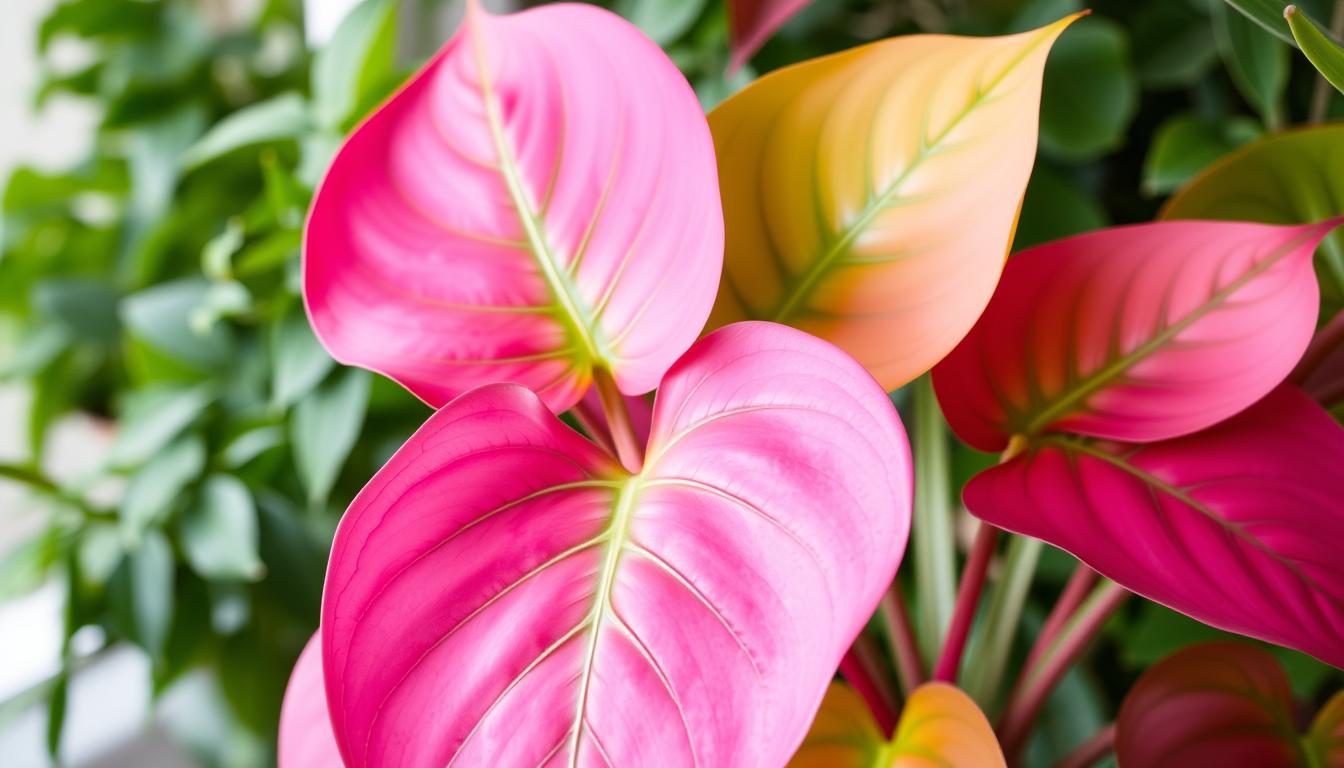
I have a deep affection for the pink Monstera. It’s not just because of its stunning aesthetic plant features. This beautiful houseplant brightens up any room with its vibrant pink foliage.
One of the main reasons I love the pink Monstera is its unique ability to thrive indoors. It’s the perfect addition to my home.
Some of the key benefits of having a pink Monstera as a houseplant include:
- Low maintenance care
- Ability to purify the air
- Beautiful aesthetic plant features
The pink Monstera is also a great conversation starter in decor. It adds a touch of tropical elegance to any room. Its stunning split leaves and vibrant pink foliage make it a popular choice among plant enthusiasts.
Overall, the pink Monstera is a beautiful and unique aesthetic plant. It adds elegance to any room. Its ability to thrive indoors and low maintenance care make it perfect for adding greenery to your home.
Unique Aesthetics
The pink Monstera’s unique aesthetics are striking. Its stunning split leaves and vibrant pink foliage make it a true showstopper. It’s perfect for adding tropical elegance to your living room or a pop of color to your office.
Thriving in Indoor Environments
The pink Monstera is incredibly easy to care for. It thrives in indoor environments with minimal maintenance. This makes it perfect for adding greenery to your home without fuss.
Conversation Starter in Decor
The pink Monstera is a great conversation starter in decor. It adds a touch of tropical elegance to any room. Its stunning split leaves and vibrant pink foliage impress friends and family with its exotic beauty.
Understanding Pink Monstera Varieties
I’m excited to share my knowledge about Monstera plants. There are over 40 types, making it hard to pick the right one. Knowing what each variety needs is key for their health and growth.
Popular Monstera varieties include the Monstera Deliciosa Variegata, Thai Constellation, and Albo Monstera Deliciosa. They have stunning leaves and vibrant colors, perfect for indoor spaces. But, they can be hard to find and expensive because they’re in high demand.
Monstera Deliciosa Variegata
This variety has beautiful, variegated leaves. It’s a favorite among tropical plant lovers. To care for it, give it bright, indirect light and keep the temperature between 65-75°F.
Other Notable Hybrids
Other notable hybrids are the Monstera Dubia, Monstera Obliqua, and Monstera Epipremnoides. Each has its own look and care needs, perfect for experienced plant lovers. Here are some key facts about these hybrids:
- Monstera Dubia: grows up to 3-10 feet tall, prefers partial sun, and thrives in zones 9-11
- Monstera Obliqua: grows up to 6-10 feet tall, likes indirect sunlight, and thrives in zone 11
- Monstera Epipremnoides: grows up to 7-13 feet tall, needs indirect sunlight, and thrives in zones 11-12

By learning about Monstera varieties and their care needs, you can create a beautiful indoor space. It shows your love for tropical plants.
| Monstera Variety | Height | Light Requirements | Zone |
|---|---|---|---|
| Monstera Deliciosa Variegata | up to 10 feet | indirect sunlight | 9-11 |
| Monstera Dubia | up to 3-10 feet | partial sun exposure | 9-11 |
| Monstera Obliqua | up to 6-10 feet | indirect sunlight | 11 |
Essential Care Tips for My Pink Monstera
To keep my pink Monstera plant thriving, I’ve learned that plant care is crucial. As an indoor plant, it needs specific conditions to grow well. It likes bright, indirect light but can handle low light too.
My Monstera prefers warmer temperatures between 65-75°F and humidity levels of 50-70%. Watering is key, with most Monstera plants needing water once a week in summer and once every 10-14 days in winter.
Here are some essential care tips for my pink Monstera:
- Water only when the top 1-2 inches of soil are dry
- Provide filtered indirect light
- Maintain temperatures above 60 degrees Fahrenheit
- Keep humidity levels above 50 percent
By following these care tips, I can ensure that my pink Monstera plant receives the care it needs to thrive as a beautiful indoor plant. Proper plant care is essential to prevent common issues such as overwatering, underwatering, and pest infestations.
Remember, every plant is unique, so it’s essential to observe and adjust your care routine accordingly. With the right care, my pink Monstera will continue to grow and flourish, bringing beauty and life to my indoor space.
| Care Tip | Recommendation |
|---|---|
| Watering | Water once a week in summer, once every 10-14 days in winter |
| Light | Provide filtered indirect light |
| Temperature | Maintain temperatures between 65-75°F |
| Humidity | Keep humidity levels between 50-70% |
Soil and Potting Requirements
Creating a stunning houseplant display starts with the right soil and potting mix. For my pink Monstera, a well-draining mix is key for growth. A mix with peat moss, perlite, and vermiculite balances moisture and air.
Choosing the right pot size is also crucial. Pick a pot that’s a bit bigger than the plant’s roots. This lets the roots grow, helping the plant thrive. The right pot can really enhance a room’s look.

When picking a potting mix for your pink Monstera, consider these points:
- Well-draining ingredients to avoid waterlogged soil
- Organic matter like peat moss or coconut coir to hold moisture
- A mix with balanced nutrients for healthy growth
Choosing the right soil and potting mix can make your pink Monstera stand out. Whether you’re experienced or new to plant decoration, the right mix is vital for your plants’ health and beauty.
Propagating My Pink Monstera
I’m thrilled to share my journey in propagating my pink Monstera. This lets me share my plant with loved ones or grow new ones. Propagating a Monstera needs some plant care knowledge, but it’s very rewarding.
Stem cuttings are a top choice for Monstera propagation. You cut a stem, remove leaves, and plant it in soil or water. Water propagation is cool for watching roots grow. Soil is better for quick establishment.
- Choose a healthy stem with at least one node
- Ensure the right light and water
- Keep it warm and humid
By following these tips and techniques, you can successfully propagate your pink Monstera. Enjoy the fruits of your plant care labor.
Dealing with Common Pests
As a houseplant lover, I’ve found that pests can still be a problem, even with good plant care. Monstera plants are pretty tough, but pests like thrips, spider mites, scale, and fungus gnats can still harm them. Look for signs like yellow leaves, sticky stuff on leaves, webs, powdery stuff, and holes in leaves to spot pests.
Some pests that might bother Monstera plants include:
- Aphids: small insects that cause yellowing and misshapen leaves
- Mealybugs: small insects with a white waxy covering that cause stunted growth
- Scale insects: vary in appearance, but often have a waxy cover and feed on the plant’s sap
- Spider mites: tiny pests that cause speckling on the upper sides of leaves
To fight pests, I suggest using natural remedies like neem oil, insecticidal soap, or horticultural oil. Regular houseplant care, like checking your plant often and keeping the area clean, can also help. These steps will help your Monstera plant stay healthy and strong.
Remember, catching pests early is crucial to stop them from getting worse. With the right plant care and attention, you can enjoy your Monstera plant without worrying about pests.
Fertilizing Your Pink Monstera
As a tropical plant lover, I know how crucial proper care is. This includes fertilizing your plants. I use a balanced, water-soluble fertilizer with a 3-1-2 or 2-2-2 NPK ratio for my pink Monstera. This boosts its growth and health, making it look vibrant.
Experts suggest fertilizing your Monstera every 2-3 weeks in spring and summer. In fall and winter, once a month is best. Following this schedule has helped my plant grow and stay healthy.
Some key benefits of fertilizing your pink Monstera include:
- Promoting healthy growth and development
- Enhancing the plant’s overall health and vitality
- Supporting the development of large, lush foliage
Always follow the instructions on the fertilizer package. Be careful when using chemical fertilizers. With the right care and fertilization, your pink Monstera will flourish and beautify your home.
| Fertilizer Type | NPK Ratio | Application Frequency |
|---|---|---|
| Water-soluble fertilizer | 3-1-2 or 2-2-2 | Every 2-3 weeks (growing season) |
| Slow-release fertilizer | 18-6-12 | Once every 8 months |
Keeping My Pink Monstera Healthy
To keep my pink Monstera plant healthy, I focus on the right conditions. This means ensuring proper drainage and pruning. Proper drainage stops waterlogged soil, which can cause fungal diseases. I make sure the pot has holes to prevent this.
Pruning is key for my pink Monstera. It controls size and shape, and promotes growth. Regular pruning encourages new growth and keeps the plant full and vibrant. For indoor plant care, prune during the growing season for best results.
Here are some tips for keeping my pink Monstera plant healthy:
- Water my plant when the top 2-3 inches of soil feel dry to the touch
- Provide my plant with adequate light, water, and nutrients to promote larger, healthier leaves
- Monitor my plant regularly for common houseplant pests such as spider mites, mealybugs, and scale insects
By following these tips, I can keep my pink Monstera plant healthy and thriving. Regular plant care prevents issues like overwatering and nutrient deficiencies. With proper care, my plant will grow and flourish, adding beauty to my home.

Remember, keeping my pink Monstera plant healthy requires attention to detail and a commitment to providing the right conditions for growth. By following these tips and staying on top of indoor plant care, I can enjoy the beauty and benefits of my pink Monstera plant for years to come.
| Plant Care Tip | Frequency |
|---|---|
| Watering | Every 9 days |
| Pruning | Regularly during growing season |
| Fertilization | Every 4-6 weeks during growing season |
Creating a Stunning Display
Now that we’ve covered the essential care and propagation techniques for our beautiful pink Monstera plant, let’s focus on creating a stunning display. Pairing it with complementary houseplants that share similar light and humidity requirements is a great idea. Consider adding ferns, peace lilies, or snake plants to create a lush, tropical vibe.
Don’t be afraid to get creative with plant decoration! A decorative pot or planter that complements the plant’s foliage can be a true showstopper. You can also incorporate natural elements like moss, rocks, or driftwood to add depth and texture to your display. By following these simple tips, you’ll be able to create a visually stunning arrangement that showcases your pink Monstera and adds a touch of elegance to your indoor space.
FAQ
What makes the pink Monstera plant so unique and desirable?
The pink Monstera plant stands out with its stunning split leaves and vibrant pink foliage. It’s a favorite for its exotic beauty and easy care. This makes it a hit among plant lovers and decor enthusiasts.
What are the different varieties of pink Monstera plants to choose from?
The Monstera Deliciosa Variegata is the most sought-after pink Monstera. It boasts stunning split leaves and vibrant pink foliage. Other hybrids also exist, each with its own look and care needs.
What are the essential care tips for keeping my pink Monstera plant healthy?
For a healthy pink Monstera, provide bright, indirect light and keep temperatures between 65-75°F. Maintain humidity levels of 50-70%. Water once a week in summer and every 10-14 days in winter.
What type of soil and pot size does my pink Monstera plant need?
Use a well-draining soil mix with peat moss, perlite, and vermiculite. Choose a pot slightly larger than the plant’s roots to allow for growth.
How can I propagate my pink Monstera plant?
Propagate your pink Monstera using stem cuttings. Cut a section, remove lower leaves, and plant it in soil or water. Water propagation lets you see roots grow, while soil helps the new plant establish quickly.
How do I deal with common pests that may affect my pink Monstera plant?
If pests like spider mites, mealybugs, or scale appear, don’t worry. Use natural remedies like neem oil, insecticidal soap, or horticultural oil to control them. This keeps your plant healthy.
How often should I fertilize my pink Monstera plant?
Fertilize every 2-3 weeks in spring and summer, and once a month in fall and winter. Use a balanced fertilizer with nitrogen, phosphorus, and potassium.
What steps can I take to ensure my pink Monstera plant stays healthy?
Ensure proper drainage and avoid water on leaves to prevent diseases. Prune regularly to control size and promote growth.
How can I create a stunning display with my pink Monstera plant?
Pair your pink Monstera with plants like ferns, peace lilies, and snake plants. Choose a decorative pot and add moss, rocks, or branches for a unique display.
Related Posts
 Plant Life & Guides
The Ultimate Guide to Philodendron Monstera Split Leaf Care
Learn the ultimate philodendron monstera split leaf care guide. I'll share my expert advice on keeping this stunning plant healthy and thriving.
Bloomy Indoor
• Jan 28, 2025
• 11 min read
 Plant Life & Guides
I Mastered the Pink Monstera – Here’s How You Can Too
Transform your living space with the Pink Monstera Plant, a rare houseplant with vibrant pink leaves. Discover care guidelines and styling advice to make this plant thrive indoors.
Bloomy Indoor
• Jan 28, 2025
• 12 min read

