Last Updated at Dec 28, 2024 by Bloomy Indoor - 10 min read
Pothos Key Characteristics: A Guide to This Popular Houseplant
Discover the key characteristics of the popular pothos houseplant and learn how to care for it.
Table of Contents
What makes pothos a favorite among plant lovers? Its attractive foliage and air-purifying qualities are key. These features make it a great addition to any space. Pothos thrives in many environments, making it a top choice for many.
As a plant enthusiast, I’ve discovered pothos’ special qualities. It grows well in tropical environments. Its lush vines and heart-shaped leaves make it visually stunning and easy to care for.
Key Takeaways
- Pothos is a popular houseplant known for its attractive foliage and air-purifying qualities.
- Pothos key characteristics include its ability to thrive in various environments and its unique features, such as its heart-shaped leaves.
- Pothos plant features, including its growth rate and toxicity, are essential to understand for proper care and maintenance.
- Pothos can grow up to 65 feet long and is hardy in zones 10-12, making it an excellent choice for indoor and outdoor spaces.
- Pothos is not a heavy feeder and requires balanced liquid houseplant fertilizer every 1-3 months, which is an essential aspect of its pothos key characteristics.
- Pothos can be easily propagated through stem cuttings or division, making it an excellent choice for plant enthusiasts looking to explore pothos plant features.
- Pothos prefers a soil pH range from 6.1 to 6.8 and requires watering every one to two weeks, which is crucial for its growth and development.
What is Pothos?
Pothos is a well-liked houseplant from tropical areas in Southeast Asia and the Western Pacific. It’s known for its pothos key characteristics. To understand its pothos plant features, it’s helpful to know its adaptability and special needs. For more on pothos and how it differs from plants like philodendron, check out this resource.
Pothos is known for growing well in many places, making it perfect for homes. Its pothos plant features, like heart-shaped leaves and long vines, make it beautiful.
Origin and Habitat
Pothos comes from warm, humid areas where it can grow shoots up to 10 meters long. Knowing its natural home helps us understand how to care for it. It likes semi-shady spots and warm temperatures over 16°C.
Common Name Variations
Pothos is also called devil’s vine, Ceylon creeper, and ivy arum. These names highlight its pothos key characteristics and its flexibility in different environments.
Unique Features of Pothos
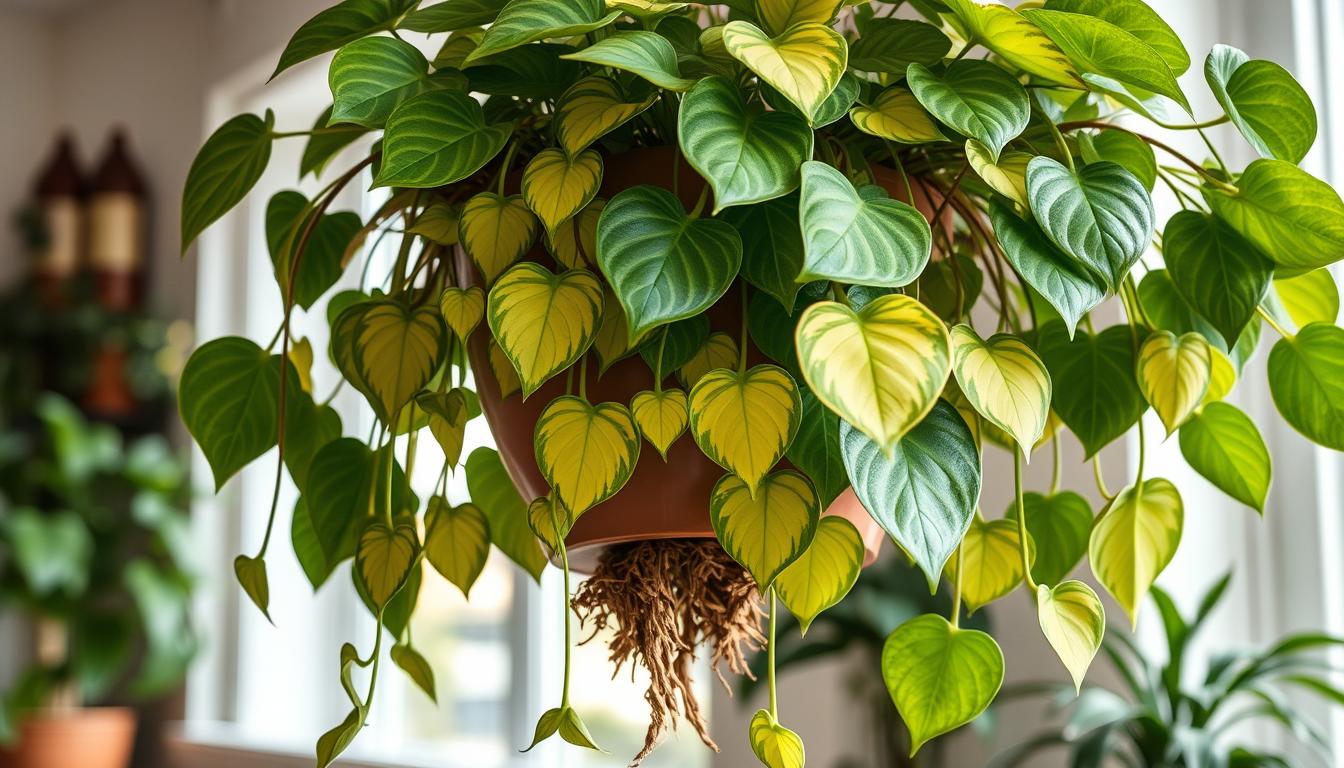
Pothos is a favorite houseplant known for its pothos key characteristics. It has heart-shaped leaves and grows quickly. The leaves come in many colors and patterns, from solid green to white, yellow, and blue.
The leaves of a pothos plant are 4-12 inches long and shiny. In the wild, they can grow up to 3 feet. The plant’s vines can grow 6-10 feet long indoors, perfect for hanging baskets or climbing supports.
Pothos is loved for its ability to grow well in different light conditions. It prefers to be a bit dry and can handle being very dry before showing signs of stress.
Leaf Shape and Color
The leaves of a pothos plant are heart-shaped with a pointed tip. They have a smooth, waxy texture. The leaves can be green, yellow, white, or blue, depending on the variety.
Growth Habit
Pothos plants grow fast and have long, trailing vines. They can reach 6-10 feet long indoors. This makes them great for hanging baskets or climbing supports. With the right care, pothos plants can thrive in many environments, making them a popular choice for decoration.
Care Requirements for Pothos
To keep your pothos plant happy and thriving, it’s essential to understand its care requirements. One of the most critical aspects of pothos care tips is providing the right amount of light. Pothos plants prefer bright, indirect light but can tolerate low light conditions. However, direct sunlight can be harmful, so it’s best to place your pothos near an east- or west-facing window.
Another crucial aspect of pothos care is watering. Pothos water needs are relatively low, and the plant should be allowed to dry out slightly between waterings. The top inch of soil should be dry to the touch before watering again. Overwatering can lead to root rot, so it’s essential to be mindful of your watering schedule.
Here are some additional pothos care tips to keep in mind:
- Water your pothos plant thoroughly when the soil is dry to the touch
- Fertilize your pothos plant every other month during the growing season
- Prune your pothos plant regularly to control its growth and encourage new leaves

By following these pothos care tips and understanding the plant’s pothos light preferences and pothos water needs, you can help your pothos plant thrive. Enjoy its beautiful, trailing vines for years to come.
| Pothos Care Tip | Description |
|---|---|
| Lighting | Bright, indirect light |
| Watering | Allow soil to dry out slightly between waterings |
| Fertilization | Fertilize every other month during the growing season |
Propagation Techniques
I’m excited to share pothos propagation methods with you. Pothos can be easily grown from stem cuttings. You can root them in water or soil. Roots grow in 3-4 weeks, making it a cheap way to get new plants.
Water propagation is great for beginners. Cut a 4-6 inch stem from a healthy pothos. Place it in a glass of water and change it every 3-4 days. You can also plant them in soil for stronger roots.
For more on plant propagation, check out the guide on how to propagate Hoya Carnosa. Pothos can be propagated in several ways, including:
- Water propagation: roots develop within 3-6 weeks
- Soil propagation: results in plants with stronger roots
- Sphagnum moss propagation: roots develop within a few weeks
After propagating, a baby pothos needs time to adjust. Give it bright, indirect light and fertilize every 2-3 months. With care, your new pothos will thrive, bringing beauty and ease to your home.
Health Benefits of Pothos
Pothos is more than a pretty houseplant. It also has health perks. One key benefit is its air-purifying power. It can remove harmful chemicals like formaldehyde and toluene from the air.
This makes it great for indoor spaces, especially where air quality is poor.
Pothos also helps with mental health. Studies show it can lower stress hormones, making you feel calmer. Learning about plants like Calathea Orbifolia can show how plants improve health.
- Improved air quality
- Reduced stress and anxiety
- Boosted mood and cognitive function
- Antioxidant and anti-inflammatory properties
Pothos is a versatile plant that offers many health benefits. By knowing its pothos key characteristics and how to care for it, you can enjoy its advantages at home or work.
Common Pests and Diseases
As a pothos plant owner, knowing about common pests and diseases is crucial. Pests like mealybugs, scales, and spider mites can harm your plant. Look for small, white, cottony patches on leaves or stems for mealybugs. Scales show up as small, brown or black bumps.
To protect your pothos, prevention is key. Regularly check your plant, especially when introducing new ones. Use natural pest control methods to keep it healthy. Good air circulation and avoiding overwatering prevent root rot.

- Water carefully to avoid overhead watering, which can cause brown and black spots on the leaves
- Provide bright, indirect light to promote healthy growth
- Fertilize regularly to give essential nutrients
By following these tips and watching out for pests and diseases, you can keep your pothos healthy and thriving.
Varieties of Pothos
There are many pothos varieties to pick from, each with its own look and feel. Some favorites include Golden Pothos, Marble Queen, Neon, Jade, Pearls and Jade, Cebu Blue, and N’Joy.
Choosing the right soil is key for your pothos plant’s health. With so many varieties, picking the right one can be tough. Here are a few favorites:
- Golden Pothos: has waxy, heart-shaped green leaves with yellow spots
- Marble Queen Pothos: has green leaves with white spots
- Neon Pothos: has bright green-yellow leaves
These varieties offer a range of choices for plant lovers. From the classic Golden Pothos to the unique Neon Pothos, there’s something for everyone. Knowing what each variety looks like helps you pick the perfect one for your collection.
There are many more pothos varieties to discover, each with its own special traits. Whether you’re new to plants or have been growing them for years, there’s a pothos for you.
| Pothos Variety | Leaf Color | Leaf Size |
|---|---|---|
| Golden Pothos | Green with yellow variegation | 2-4 inches |
| Marble Queen Pothos | Green with white variegation | 2-5 inches |
| Neon Pothos | Bright green-yellow | 2-4 inches |
Pothos in Home Décor
Exploring pothos, I’m amazed by its versatility in home décor. Its trailing vines and heart-shaped leaves bring elegance to any room. Hanging baskets are a great way to show off pothos, letting its stems cascade down for a stunning look.
Experimenting with pothos placement is key. You can use it as underplanting for big plants or trees, adding color and texture. Or, train it to climb up a sphagnum pole for a vertical display that highlights its pothos key characteristics.
Best Placement Ideas
- Hanging baskets: perfect for showcasing trailing vines
- Underplanting: adds color and texture to large potted plants or trees
- Trained to climb: creates a stunning vertical display
To elevate your pothos game, pair it with plants that complement its beauty. Combining pothos with plants that share similar pothos key characteristics creates a stunning arrangement. This enhances your home’s look.
Troubleshooting Common Issues
I know your journey with your pothos plant hasn’t always been smooth. Even the most seasoned plant parents face hiccups. But don’t worry, I’m here to help you solve common pothos problems.
Yellowing Leaves
Yellowing leaves are a common issue. It can be due to overwatering, underwatering, or nutrient deficiencies. Keep an eye on your pothos’s soil moisture and adjust your watering. Also, ensure it gets enough sunlight and consider using a balanced fertilizer during the growing season.
Stunted Growth
If your pothos isn’t growing well, it might need more light or better soil. Make sure it’s in a bright, indirect sunlight spot. You might also need to repot it into a larger container with fresh potting mix to give its roots room.
By tackling these common issues and following the care tips, I’m sure your pothos will thrive. Remember, theFlora appcan help with real-time plant health monitoring and care advice.
FAQ
What are the key characteristics of pothos?
Pothos has lush, trailing vines and heart-shaped leaves. These leaves come in many colors and patterns. It’s a versatile, easy-to-care-for houseplant that does well indoors.
Where does pothos come from and what are its common names?
Pothos comes from the tropical regions of Southeast Asia and the Western Pacific. It’s also called devil’s ivy, silver vine, and centipede tongavine.
What makes pothos leaves unique?
Pothos leaves are heart-shaped and vary in size, texture, and color. They can be used in hanging baskets or trained to climb.
How do I care for my pothos plant?
Pothos likes bright, indirect light and dry soil between waterings. Avoid overwatering to prevent root rot.
Can I propagate pothos easily?
Yes, propagating pothos is simple. You can root stem cuttings in water or plant them in soil to grow new plants.
What are the health benefits of having a pothos plant?
Pothos is a good air purifier, removing indoor pollutants. It can also improve your mood and well-being.
What pests and diseases should I look out for with pothos?
Watch out for mealybugs, scales, and spider mites. Also, be careful of root rot from overwatering.
What are the most popular varieties of pothos?
Popular varieties include the Golden Pothos and Marble Queen Pothos. Each has unique leaves and patterns.
How can I incorporate pothos into my home décor?
Display pothos in hanging baskets or train it to climb. It’s great for underplantings and adds beauty to any space.
How do I troubleshoot common issues with my pothos plant?
For yellow leaves or stunted growth, check watering, light, and nutrients. Corrective actions can help.
Related Posts
 Plant Life & Guides
Caring for the Vibrant Pink Tradescantia Nanouk: My Tips
Effortlessly care for the eye-catching pink Tradescantia Nanouk with my simple tips. Unlock the secrets to keeping this plant lush and healthy.
Bloomy Indoor
• Feb 4, 2025
• 13 min read
 Plant Health & Troubleshooting
How to Fix Drooping Pothos Leaves: A Quick Guide
Discover how to quickly fix drooping pothos leaves and keep your plant thriving.
Bloomy Indoor
• Jan 6, 2025
• 9 min read