Last Updated at Dec 28, 2024 by Bloomy Indoor - 9 min read
Silver Satin Pothos Care: Essential Tips for Healthy Growth
Learn the ultimate silver satin pothos care routine for lush, vibrant foliage.
Table of Contents
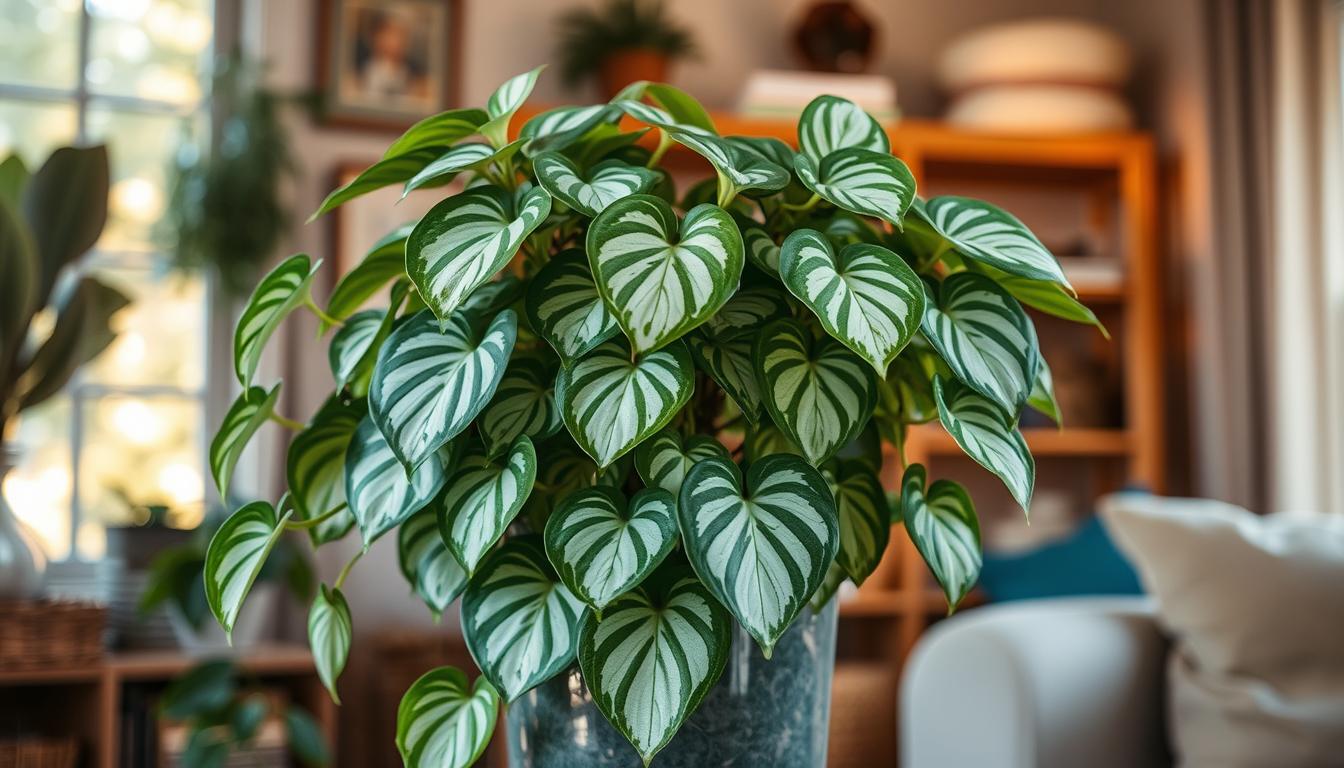
I’ve always been drawn to the silver satin pothos plant’s beauty. As a plant lover, I’ve found that with the right care, it thrives at home. This tropical vine, native to Southeast Asia, boasts heart-shaped leaves with silver patterns. It can reach up to 10 feet tall outdoors and 3 feet indoors. For more on caring for this plant, check out silver satin pothos care guides.
Key Takeaways
- The silver satin pothos plant prefers partial shade and bright to moderate indirect light for optimal growth.
- It’s essential to allow the top inch or two of soil to dry out before watering the silver satin pothos plant.
- Fertilization with common houseplant fertilizer is recommended during spring and summer for healthy growth.
- Propagation of the silver satin pothos can be easily done at home by cutting off a piece of the vine with at least two nodes.
- The plant is mildly toxic when ingested by humans, cats, and dogs due to the presence of calcium oxalates in the Scindapsus genus.
- Regular transplanting, about once a year, is necessary to ensure the plant’s health and longevity.
- For more information on caring for other plants, such as the Calathea Orbifolia, you can visit plant care websites.
| Characteristics | Description |
|---|---|
| Growth Length | Up to 10 feet |
| Native Region | Southeast Asia |
| Ideal Temperature | 65-85 degrees Fahrenheit |
| Watering Frequency | Every 1-2 weeks |
| Soil Type | Well-draining |
Understanding Silver Satin Pothos
I’m excited to share my knowledge about silver satin pothos with you. This plant is part of the Araceae family. It’s often mistaken for true pothos because they need similar care and look alike. To care for silver satin pothos, knowing its characteristics is key.
The silver satin pothos is a long vine that can grow up to 10 feet. Its leaves are heart-shaped and can be 4 inches wide. The leaves have striking silver variegation, making it a stunning addition to any room. To care for it, you need well-drained acidic soil and partial sun.
Some important facts about silver satin pothos include its toxicity to pets. It prefers temperatures between 65°F to 85°F. Knowing these details helps you care for your plant, ensuring it thrives and adds beauty to your home.
Here are some key characteristics of the silver satin pothos plant:
- Native to Asia
- Perennial vine that can grow up to 10 feet long
- Leaves reach 4 inches in width
- Toxic properties make it harmful to pets
Ideal Growing Conditions
To keep your silver satin pothos healthy, you need to give it the right environment. This means knowing what it likes in terms of light, temperature, and humidity. By following these silver satin pothos care tips, you can make a perfect home for your plant.
For indoor silver satin pothos care, light is very important. It likes bright, indirect light, which you can get by putting it near a window with a curtain. Avoid direct sunlight as it’s too strong. The ideal temperature is between 65-85°F, which is common in homes.
Light Requirements
Getting the light right is all about finding a balance. Place your plant where it gets lots of natural light but not direct sun. This helps it grow well and keeps the leaves from getting scorched.
Temperature and Humidity Needs
Temperature and humidity are also key for your plant. It does best in temperatures between 65-85°F and humidity of 40-50%. To keep the air moist, you can put the plant on a tray with water and pebbles or use a humidifier.
Best Soil Options
The soil your plant grows in is very important. It should be well-draining and slightly acidic. You can make your own mix with peat moss, perlite, and vermiculite. This prevents waterlogged soil and ensures the roots get enough oxygen.

By following these tips and creating the right environment, you can enjoy your silver satin pothos. Make sure to water and fertilize it regularly. Prune it to keep it looking good. With proper care, your plant will thrive and add beauty to your home.
| Lighting | Temperature | Humidity |
|---|---|---|
| Bright, indirect light | 65-85°F | 40-50% |
Watering Your Silver Satin Pothos
Proper silver satin pothos watering is key for its health and growth. Check soil moisture by inserting your finger up to the first knuckle. If it’s dry, it’s time to water. Water when the top 2 inches of soil feel dry.
Watch out for signs of overwatering and underwatering. Overwatering can cause yellow leaves and root rot. Underwatering leads to wilting and curling leaves. Regular watering is best, but avoid too much.
For silver satin pothos care, water with 0.5 cups every 9 days in indirect sunlight. Use a well-draining potting mix to prevent soggy soil. These tips help keep your plant healthy and watered right.

Also, check out this website for humidity tips. They’re useful for your silver satin pothos too.
| Watering Frequency | Soil Moisture | Plant Response |
|---|---|---|
| Every 9 days | Dry to the touch | Healthy growth and development |
| Too frequent | Waterlogged | Root rot and yellowing leaves |
| Too infrequent | Extremely dry | Wilting and curling leaves |
Fertilization Techniques
Fertilizing your silver satin pothos is key to its health. It needs the right nutrients to grow well. Use a balanced, water-soluble houseplant fertilizer monthly during spring to fall. This helps your plant grow strong and stay healthy.
Choosing the right fertilizer is important. Look for ones with less nitrogen and more phosphorus and potassium for blooming. Slow-release fertilizers are good for those who forget to feed their plants. But, be careful with liquid fertilizers as they can cause too much nutrient if not used right.
Types of Fertilizers to Use
Here are some good fertilizers for silver satin pothos:
- Water-soluble fertilizers
- Slow-release fertilizers
- Liquid fertilizers
Always dilute liquid fertilizers to half-strength to avoid burning your plant. Make sure the soil drains well to prevent nutrient buildup. By following these tips and using the right fertilizers, your silver satin pothos will thrive. For more on fertilizing plants, check out this website. It has tips for Calathea Orbifolia that work for silver satin pothos too.

Pruning and Maintenance
As a silver satin pothos owner, I know how important regular pruning is. It keeps the plant healthy and looking good. Pruning helps control the plant’s size and makes it bushier.
To prune, start by removing yellow or damaged leaves. These can attract pests and diseases.
Using the right tools is key. I suggest pruning shears or scissors. Clean them with bleach or rubbing alcohol before and after use. This keeps your plant disease-free.
Here are some important pruning tips:
- Prune in the spring, when the plant is growing fast, for the best results
- Use sharp tools to avoid crushing the stems and making the plant susceptible to disease
- Remove any overgrown vines or damaged leaves to encourage new growth and prevent pest infestations
By following these tips, you can keep your silver satin pothos looking great and healthy for years.
Common Pests and Problems
When caring for silver satin pothos, knowing about pests and problems is key. Regular checks help stop pests and diseases. For more info, check out caring for silver satin pothos.
Identifying Common Pests
Common pests include spider mites, mealybugs, and scale insects. They harm leaves, stems, and roots. Spider mites make leaves speckled and webbed, while mealybugs look like white cotton on stems and leaves.
Too much water causes root rot, with a bad smell and mushy leaves. Not enough water makes leaves wilt and dry. Watering right and giving the right light and nutrients is crucial. For tips on Calathea Orbifolia, visit this website.
Solutions for Pests and Diseases
To fight pests and diseases, use natural solutions like insecticidal soap and neem oil. Regular pruning helps too. Follow these steps to keep your silver satin pothos healthy.
- Inspect the plant regularly for signs of pests or diseases
- Use natural remedies like insecticidal soap and neem oil to treat pests
- Prune the plant regularly to prevent the spread of pests and diseases
- Provide the plant with the right amount of light, water, and nutrients
Propagating Silver Satin Pothos
Propagating your Satin Pothos is a fun journey. It lets you grow more plants or share them with friends. By using proven techniques, you can see new, vibrant plants grow. I’ll show you how to do it, whether in water or soil.
For your cuttings to thrive, they need the right conditions. Choose healthy stems, use rooting hormone, and keep the environment perfect. Soon, you’ll see roots grow in about 10 days. Then, your cuttings will be ready to move to soil and grow into beautiful plants.
With patience and my help, you’ll have a lush collection of Satin Pothos. Each plant will show off your green thumb and love for indoor gardening. Enjoy watching your plants grow and let propagation spark new ideas in your garden.
FAQ
What is silver satin pothos?
Silver satin pothos is a stunning tropical vine. It has heart-shaped leaves with striking silver variegation. It’s a relative of the popular pothos plant but has its own unique traits.
What are the key features of the silver satin pothos plant?
The silver satin pothos has heart-shaped leaves with silver-grey variegation. It can grow as a trailing or climbing vine. This makes it a beautiful addition to any indoor space.
What are the ideal lighting conditions for a silver satin pothos?
Silver satin pothos thrive in bright, indirect light. They should avoid harsh direct sunlight to prevent leaf scorch. The right light is crucial for their health and growth.
How often should I water my silver satin pothos?
Watering silver satin pothos requires finding the right balance. Water when the top inch or two of soil is dry. Avoid letting it sit in water to prevent root rot.
What type of fertilizer should I use for my silver satin pothos?
Use a balanced, water-soluble fertilizer for houseplants on your silver satin pothos. Follow the instructions carefully. Avoid over-fertilizing to prevent damage.
How do I prune my silver satin pothos?
Pruning is key to a healthy, vibrant silver satin pothos. Regular trimming encourages fuller growth and keeps the plant looking good. Use clean, sharp pruning shears and cut just above a leaf node.
What are some common pests and problems that can affect silver satin pothos?
Silver satin pothos may face pests like spider mites, mealybugs, or scale insects. They can also get root rot or lose variegation if conditions are not right.
How do I propagate my silver satin pothos?
Propagating silver satin pothos is a great way to grow more plants or share with friends. You can do it through water or soil propagation. Both methods involve taking cuttings and encouraging root growth.
Related Posts
 Plant Life & Guides
Grow Lush Silver Satin Pothos: My Tips
Discover my top tips for growing a lush, thriving silver satin pothos plant.
Bloomy Indoor
• Jan 8, 2025
• 12 min read
 Plant Life & Guides
Silver Streak Pothos: The Captivating Houseplant You Need
Bring home the mesmerizing Silver Streak Pothos - a low-maintenance, eye-catching houseplant that's perfect for any indoor setting.
Bloomy Indoor
• Jan 10, 2025
• 11 min read