
Last Updated at Apr 5, 2025 by Bloomy Indoor - 13 min read
How to Care for the Snow Queen Pothos
Learn how to effortlessly care for the snow queen pothos, a stunning houseplant that thrives with the right tips.
Table of Contents
I’m excited to share my experience with the beautiful Snow Queen Pothos. It’s a stunning variety of variegated pothos with white and green leaves. This plant is perfect for both experienced plant enthusiasts and beginners. In this guide, I’ll show you how to care for this stunning houseplant.
The Snow Queen Pothos is a popular indoor plant. It has striking white and green leaves, making it a great addition to any home. It can purify the air and thrive in various lighting conditions. This is why it’s a favorite among plant lovers.
Whether you’re a seasoned plant parent or just starting out, the Snow Queen Pothos is an excellent choice. It has low-maintenance care requirements and can tolerate moderate watering needs. This makes it a staple in many indoor gardens. As we explore the world of Snow Queen Pothos, you’ll learn how to help it thrive in your home.
Key Takeaways
- The Snow Queen Pothos is a low-maintenance indoor plant that’s perfect for beginners.
- This variegated pothos is known for its striking white and green leaves and ability to purify the air.
- The Snow Queen Pothos can thrive in a variety of lighting conditions, making it a great choice for any room.
- With proper care, the Snow Queen Pothos can grow up to 10 feet tall and live for up to 10 years.
- This plant is toxic to cats, dogs, and humans, so it’s essential to keep it out of reach of pets and children.
- Regular pruning is necessary to keep the Snow Queen Pothos healthy and encourage new growth.
- The Snow Queen Pothos is a great choice for indoor gardens, as it can tolerate moderate watering needs and doesn’t require a lot of direct sunlight.
Introduction to Snow Queen Pothos
The Snow Queen Pothos is a favorite among beginner-friendly houseplants. It has beautiful, heart-shaped leaves with variegated patterns. This plant comes from tropical and subtropical forests in Southeast Asia and Australia. It’s perfect for indoor spaces because it can adapt well.
To learn more about the Snow Queen Pothos, let’s explore its origin and natural habitat.
In the wild, the Snow Queen Pothos grows quickly, covering the forest floor or climbing trees. It’s an invasive species that changes local ecosystems and outcompetes native plants. Yet, it’s still a favorite for gardens and landscapes because of its unique look and easy care.
The Snow Queen Pothos has heart-shaped leaves, 4 to 8 inches long, with creamy white and green variegation. This snow queen plant also purifies the air, making it great for indoors. With the right care, it can do well in many environments, perfect for gardening beginners.
Understanding the Snow Queen Pothos
The Snow Queen Pothos is a unique and captivating plant. It’s known for its trailing vines and stunning green and white leaves. This plant grows more compactly than other pothos varieties.
Its distinctive leaf pattern is what makes it stand out. The leaves are bright white with patches and speckles of bright green. This variegation looks great but needs specific growing conditions to stay vibrant. For more info on plant care, check out plant care guides.
The Snow Queen Pothos can grow well in different light conditions. It does best in bright indirect light to moderate and low light. But, direct sunlight can scorch the leaves. So, finding the right balance is key. With proper care, it can grow up to 1-3 feet tall and wide, adding beauty to any indoor space.
Growth Patterns and Size
Here are some key facts about the growth patterns and size of the Snow Queen Pothos:
- Mature Height: 1 – 3 feet
- Mature Spread: 1 – 3 feet
- Growing Zones: All Growing Zones Indoors
By understanding the unique characteristics and growth patterns of the Snow Queen Pothos, you can provide the best care for your plant. Enjoy its beautiful green and white leaves and trailing vines for years to come. To keep your Snow Queen Pothos thriving, ensure it receives bright, indirect light and well-draining soil. However, should you notice any issues such as silver pothos leaf curling causes, it’s essential to investigate environmental factors like humidity and water levels. Addressing these concerns promptly will help maintain the plant’s health and enhance its vibrant appearance.
Ideal Growing Conditions
The Snow Queen Pothos is easy to care for, making it perfect for indoor spaces. It loves bright, indirect light but can handle low light too. This makes it great for various rooms.
This plant thrives in temperatures between 65 and 85 degrees Fahrenheit. It also needs well-draining, loamy potting mix to avoid waterlogged soil and root rot. Here are some key factors to consider:
- Light: Bright, indirect light is preferred, but it can adapt to low light conditions.
- Temperature: Ideal temperatures range between 65 and 85 degrees Fahrenheit.
- Humidity: Medium to high humidity levels are suitable for the Snow Queen Pothos.
- Soil: Well-draining, loamy potting mix is recommended to prevent waterlogged soil.

By giving your Snow Queen Pothos the right conditions, it will thrive. This plant is perfect for busy people or those new to plant care. It’s low maintenance and adaptable.
| Factor | Ideal Condition |
|---|---|
| Light | Bright, indirect light |
| Temperature | 65-85 degrees Fahrenheit |
| Humidity | Medium to high humidity |
| Soil | Well-draining, loamy potting mix |
Watering Needs
As an indoor plant lover, I’ve learned watering is key for my snow queen pothos. It’s important to know what it likes. The plant prefers to dry out a bit before needing water. Soft, droopy leaves mean it’s time to water.
In the growing season, my snow queen pothos needs more water. But, too much water can harm it. Here are some tips for watering your snow queen pothos:
- Bright light speeds up photosynthesis and water use.
- Hot temperatures mean the plant needs more water faster.
- Dry air means you’ll need to water more often to keep it healthy.
It’s crucial to use soil that drains well to avoid root rot. A pot with holes and the right soil mix helps. Mulching also keeps the soil moist and cuts down on watering.
By following these tips and adjusting for the season, my snow queen pothos stays healthy. It’s safer to water a bit less than too much. This way, you can avoid harming your plant.
| Season | Watering Frequency |
|---|---|
| Spring/Summer | Every 7-10 days |
| Autumn/Winter | Every 10-14 days |
Fertilizing Your Snow Queen Pothos
The Snow Queen Pothos is easy to care for. But, using a balanced liquid fertilizer helps it grow well. Use this fertilizer once a month in spring and summer when it’s growing.
Don’t fertilize in fall and winter when it’s dormant. Too much fertilizer can harm your plant. Signs of too much fertilizer include brown leaves, slow growth, and white salt on the soil.
- Apply a balanced liquid fertilizer once a month during spring and summer.
- Stop fertilizing during fall and winter months.
- Monitor your plant’s health and adjust the fertilization schedule as needed.
By following these steps and using the right fertilizer, your Snow Queen Pothos will thrive. It will become a beautiful addition to your home, needing little care.
| Fertilizer Type | Application Frequency | Season |
|---|---|---|
| Balanced liquid fertilizer | Once a month | Spring and summer |
| No fertilizer | N/A | Fall and winter |
Pruning and Maintenance
The Snow Queen Pothos is easy to care for. It doesn’t need much pruning to stay healthy and look good. Pruning helps keep the vines from getting too long.
Using the right tools is key when pruning. Clean, sharp scissors or pruning shears work best. You can also use a trellis to help the vines grow upwards. This makes the plant look fuller.

Pruning has many benefits. It keeps the plant the right size and encourages it to grow well. Regular pruning also helps the plant bloom more. This way, your Snow Queen Pothos will stay beautiful for a long time.
| Pruning Tips | Benefits |
|---|---|
| Prune back long vines | Encourages bushy growth |
| Use sharp, clean tools | Prevents damage to the plant |
| Prune regularly | Promotes healthy growth |
Pest and Disease Management
As a snow queen plant owner, knowing about pests and diseases is key. Regular checks and quick action can stop problems. This keeps your Snow Queen Pothos healthy and vibrant.
Some common pests include:
- Mealybugs
- Scale
- Aphids
- Spider mites
Your plant can also get diseases like root rot from too much water. It’s important to water right and ensure the soil drains well.
Regularly inspect your plant and act fast if you see any issues. With the right care, your Snow Queen Pothos will thrive. Regularly inspect your plant and act fast if you see any issues. With the right care, your Snow Queen Pothos will thrive.
| Pest/Disease | Symptoms | Treatment |
|---|---|---|
| Mealybugs | White, cottony patches on leaves | Insecticidal soap or neem oil |
| Root Rot | Yellowing or browning leaves, soft stems | Improve drainage, reduce watering |
Propagating Snow Queen Pothos
The variegated pothos is a great choice for beginners. It’s easy to grow from stem cuttings. The best time to do this is in spring and early summer when it’s actively growing.
To begin, pick a healthy stem with several nodes. Cut it below a node using clean tools. Then, put the stem in water until roots start to grow.
Most cuttings, about 85%, will grow roots when they’re healthy and have many nodes. Make sure to use clean tools and cut below a node. This can boost your chances of successful root growth by 70%. Roots should show up in water in 2-3 weeks. Move the cutting to soil when the roots are 2-3 inches long.
- Choose a healthy stem with multiple nodes.
- Cut the stem below a node using disinfected tools.
- Submerge the cutting in water until roots grow.
- Transfer the cutting to soil when the roots reach 2-3 inches in length.
By following these steps, you can grow more Snow Queen Pothos. Give your new plant bright, indirect light and well-draining soil. This will help it grow well.
| Propagation Method | Success Rate | Time Frame |
|---|---|---|
| Stem Cuttings | 85% | 2-3 weeks |
| Water Propagation | 70% | 1-2 weeks |
Repotting Your Snow Queen Pothos
As your snow queen pothos grows, it may need a new home. Repotting is key for your indoor plant to grow well. Look for signs like dry soil or the plant toppling over.
Choose a pot that’s only one size bigger than the current one. Make sure it has lots of holes for drainage. Terracotta pots are best because they let the soil breathe and prevent root rot. Stay away from plastic pots if you often forget to water.
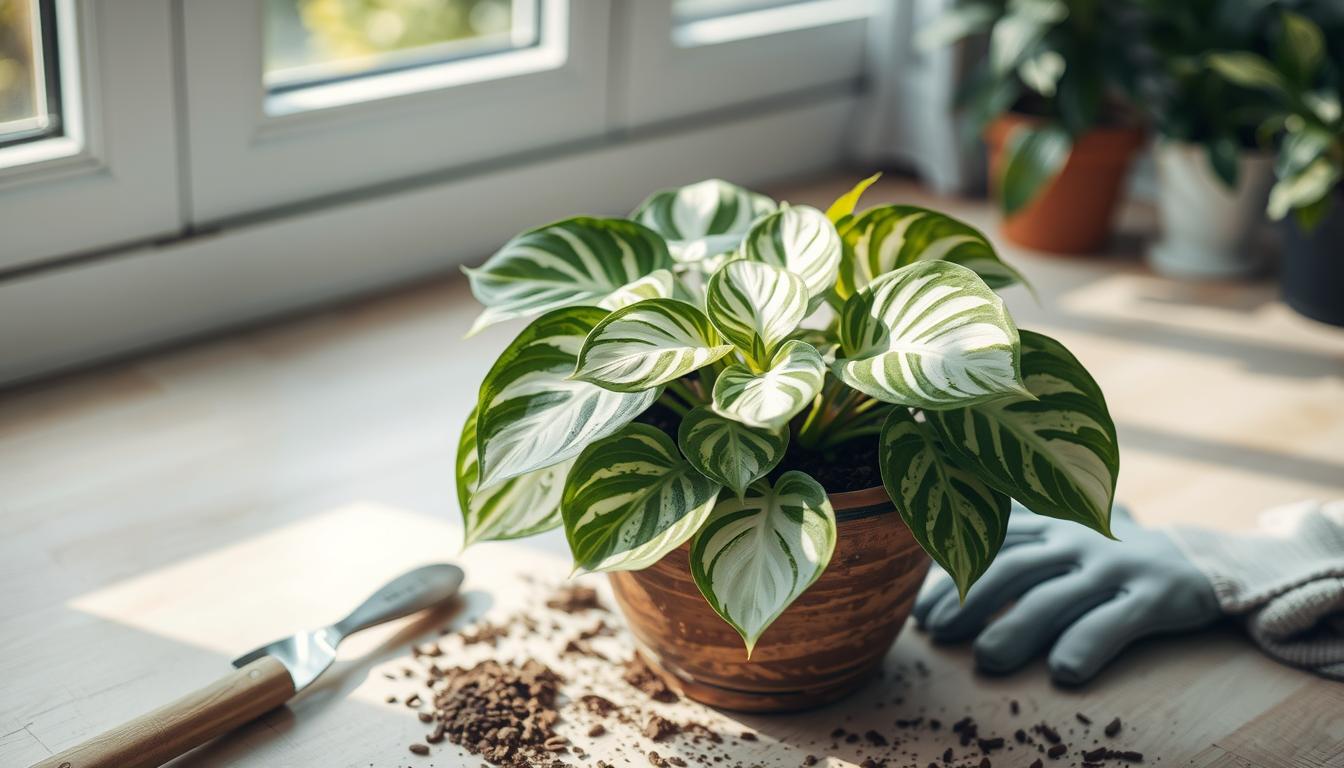
When you repot your snow queen pothos, the soil should be moist but not wet. Be gentle with the roots and make sure the vines aren’t buried. Water your indoor plant well after repotting to help it adjust and grow.
Some important things to think about when repotting include:
- Up-potting to a larger container
- Foliage overgrowth
- Root-bound plants
- Poor soil mix replacement
- Aesthetic preferences
By following these steps and thinking about these points, you’ll give your snow queen pothos the best chance to grow and thrive in its new home.
Recognizing Plant Stress
The snow queen plant is easy to care for, but it can still get stressed. To keep it healthy, it’s key to spot stress signs. Look out for yellowing, brown, or crispy leaves, and leaves that curl or lose their color.
Stress can come from many things like wrong watering, bad lighting, or not enough nutrients. Too much water can rot the roots and turn leaves brown. Not enough water makes leaves dry and brittle. To fix this, water regularly and keep the air around the plant right.
To help a stressed snow queen plant, find out why it’s stressed and fix it. This might mean changing how often you water, adjusting the light, or feeding it. Quick action can help your plant get better and do well again. Here are some common problems and how to solve them:
- Yellowing leaves: Check the watering schedule and adjust as needed
- Brown spots: Maintain proper humidity levels and avoid overwatering
- Curling leaves: Adjust the lighting to provide more or less light
By spotting stress signs and acting fast, you can keep your snow queen plant in top shape. With the right care, it will keep looking great for a long time.
Benefits of Having Snow Queen Pothos
Having a Snow Queen Pothos is great for improving your home’s air quality. It can remove harmful toxins like benzene and formaldehyde from the air. Plus, it’s easy to care for, making it perfect for beginners.
Some of the benefits of having a Snow Queen Pothos include:
- Improved air quality through its air purifying properties
- Aesthetic appeal with its variegated leaves and trailing growth habit
- Low maintenance care, making it perfect for busy individuals
To learn more about caring for your Snow Queen Pothos, check out this guide. It offers tips on keeping your plant healthy. With its beautiful leaves and air-purifying qualities, it’s a great choice for anyone.
In summary, Snow Queen Pothos is a fantastic choice for those who want a low-maintenance, air-purifying plant. It’s visually appealing and easy to care for, making it ideal for beginners.
Conclusion: My Experience with Snow Queen Pothos
Reflecting on my time with the Snow Queen Pothos, I feel grateful and accomplished. This beginner-friendly houseplant has made my home brighter with its beautiful leaves. It has also shown me the joy of caring for a plant.
Nurturing my Snow Queen Pothos taught me patience and flexibility. Seeing it survive through seasons has been inspiring. It shows that with the right care, it can live for over a decade.
As I share my knowledge with others, I stress the importance of listening to your plant. By paying attention to its needs, you can create the best environment for it to thrive.
Final Tips for Success
Watch how much light your plant gets, water it regularly, and feed it the right nutrients. Prune and propagate it to keep it healthy and full. Most importantly, enjoy the journey. Every challenge is a chance to grow closer to your plant.
Encouragement for New Pothos Parents
Whether you’re new to plants or have experience, the Snow Queen Pothos is a great choice. With the tips from this guide, you’re ready to care for your Pothos. Enjoy the journey, celebrate your wins, and don’t worry about setbacks. Seeing your Snow Queen Pothos flourish is all the reward you need.
FAQ
What is a Snow Queen Pothos?
The Snow Queen Pothos is a popular indoor plant. It’s known for its white and green leaves. It’s easy to care for and trails beautifully.
What makes the Snow Queen Pothos unique?
Its leaves are a mix of green and white, making it stand out. It also grows well in hanging baskets or on trellises.
What are the ideal growing conditions for a Snow Queen Pothos?
It loves bright, indirect light. It prefers temperatures between 65-85°F and average humidity. It needs well-draining soil to thrive.
How often should I water my Snow Queen Pothos?
Water it when the top inch of soil feels dry. Don’t overwater to avoid root rot.
How do I propagate a Snow Queen Pothos?
Propagation is easy. Take stem cuttings and root them in water or soil. Spring or summer is the best time.
What are the common pests and diseases that affect Snow Queen Pothos?
Pests like spider mites and mealybugs can be a problem. Diseases include yellow leaves and root rot. Regular checks and care can prevent these issues.
What are the benefits of having a Snow Queen Pothos?
It’s great at purifying the air. It’s also a beautiful, easy-to-care-for plant that adds beauty to any room.
Related Posts
 Plant Life & Guides
Snake Plant Care Guide: Tips for Healthy Growth
Discover the secrets to growing and caring for your snake plant! My easy-to-follow guide covers all you need to know for healthy, thriving snake plants.
Bloomy Indoor
• Jan 26, 2025
• 10 min read
 Plant Care & Maintenance
Snow Queen Pothos: Expert Care Tips
Learn how to care for your stunning Snow Queen Pothos with my expert tips. Discover the secrets to keeping this beautiful plant thriving.
Bloomy Indoor
• Dec 31, 2024
• 7 min read

